
Last updated November 14, 2026
 Metal roofing
 Architectural shingles
 Tile roofing
 GAF
 Owens Corning
 Flat & low-slope
Free roof inspection with deck photos before we talk money - GAF and Owens Corning certified installation
Roofing Warning Signs: A Buffalo Homeowner’s Reference Guide
Granule loss in a gutter is not a warning sign on its own – it’s a data point. What that granular grit actually means depends on where on the roof it came from, what the shingle manufacturer’s cycle expectancy is, and whether the wear is uniform across the field or concentrated above a specific structural feature like a valley, a wall intersection, or a vent. This guide is built to give you, a Buffalo homeowner, the interpretive framework: how to read visible signals and know which ones demand a phone call before the next lake-effect event, and which ones mean the roof is simply aging on schedule. We’ll walk through the failure sequence itself – because granule loss isn’t the beginning of a roof’s decline, it’s the middle of it, and knowing what came before tells you a lot about what comes next.
Quick Answer
Roof warning signs in Buffalo break into two categories: signals of active deterioration (granule loss in gutters, cupping or clawing shingles, ground-level flashing gaps) and signals of active water infiltration (interior ceiling stains, frost on the roof deck in January, dark streaks below vents). A homeowner who can separate cosmetic wear from functional failure knows when to inspect, when to repair, and when to plan replacement – and in a Buffalo climate, that distinction usually comes down to water. When in doubt, a roof inspection reads the sequence correctly before a small repair turns into a structural problem.
Styles & brands we work with
- Architectural shingles
- Metal roofing
- Tile roofing
- GAF
- Owens Corning
- Flat & low-slope
Table of Contents
- Granule Loss: Reading the Data in Your Gutters
- Cupping, Clawing, and Thermal Cracking: Three Failure Modes
- Ice Dam Staining vs. Active Infiltration
- Interior Signals Buffalo Homeowners Miss
- Flashing Failure: Ground-Level Clues vs. Close Inspection
- Lake-Effect Wind Events vs. Snow Load Cycles
- Common Mistakes to Avoid
- When to Call a Professional
Granule Loss: Reading the Data in Your Gutters
Every asphalt shingle roof loses granules over its life. The granules are the mineral armor that protects the asphalt beneath from UV degradation, and as a roof ages, some of that armor sheds. The question is never whether granules are in the gutter – it’s what the pattern tells you. A light, uniform dusting of granules across the entire gutter run on a roof that’s fifteen or more years old is normal wear. A concentrated pile of granules at a specific downspout, especially one fed by a valley, points to a specific section of the roof working harder than the rest.
Here’s the sequence to think through when you find granules in a Buffalo gutter:
- Note the roof’s age. A roof under ten years old should not be shedding enough granules to notice. If it is, the shingles may have been defective from the manufacturer, installed over an uneven deck, or impacted by a storm. Manufacturers like GAF and CertainTeed engineer their shingles for specific granule retention cycles, and premature loss that severe is worth a professional read.
- Locate the downspout. Walk the gutter run upward and identify which roof plane drains to that point. A north-facing plane in Buffalo holds snow and ice longer, which accelerates wear. A plane that catches full afternoon sun in summer works through thermal cycling differently.
- Check for bare asphalt. Granules in the gutter matter less than what’s left on the shingle. If you can see shiny, smooth patches on shingles from the ground – especially near the eaves or in a valley – the shingle is in late-stage failure.
We look before we quote, and that starts with understanding whether granule loss is uniform aging or a targeted symptom. Uniform means budget for replacement in the next few years. Targeted means a specific root cause worth finding now.
Cupping, Clawing, and Thermal Cracking: Three Distinct Failure Signals
Shingles don’t fail one way. They fail in patterns, and each pattern points to a different root cause. Buffalo’s freeze-thaw cycle and summer humidity produce all three of these modes, but knowing which one you’re looking at changes the urgency and the fix.
Cupping: Edges Curl Upward, Center Dips
Cupping looks like a shallow bowl forming in each shingle. The edges lift, the middle sinks. This usually points to moisture trapped in the shingle mat itself, often from attic ventilation that isn’t moving enough air. Warm, moist air rises from living space into the attic in winter, condenses on the underside of the roof deck, and the shingle mat absorbs the moisture and warps. Cupping is a ventilation failure first and a shingle failure second. Repairing shingles without addressing the airflow problem means the new shingles cup too.
Clawing: Edges Curl Downward, Center Lifts
Clawing is the opposite shape: the shingle edges grip downward, the middle rises. This typically points to age and material fatigue – the asphalt has hardened and the shingle is losing flexibility. Clawing shingles are brittle; they crack when walked on, and they’re at high risk for wind lift during a lake-effect blow. Clawing on a roof over fifteen years old in Buffalo is often the signal that the roof has entered its final service window.
Thermal Cracking: Vertical Splits Along the Shingle
Thermal cracking appears as narrow splits running vertically along the exposed edge of the shingle. It comes from repeated expansion and contraction – Buffalo’s January cold and July heat work against each other. Shingles from manufacturers like Tamko and Atlas use asphalt blends designed to resist this cycle, but every shingle has a thermal limit. Cracks allow water straight to the mat and deck below, so this mode correlates with interior leaks more often than cupping does.
Reading these three modes from the ground is possible on a clear day with good sightlines – cupping and clawing are visible when sunlight hits the roof at a low angle, and thermal cracks show as dark lines. But we’ve found the real diagnosis usually comes from an inspection that includes the underside of the deck, because ventilation and thermal issues both leave evidence in the attic.
Ice Dam Staining vs. Active Infiltration
An ice dam forms when heat escapes through the attic and melts snow on the upper roof, sending water down to the cold eave edge where it refreezes. The dam then traps water behind it, and that water can work up under shingles and into the house. The staining it leaves behind is famous in Buffalo: dark, irregular streaks on the underside of the eave, surface discoloration on interior ceilings near exterior walls, water marks that follow a horizontal line across drywall.
Here’s the critical distinction most guides miss: staining tells you something happened. Active infiltration tells you something is happening right now. The difference determines urgency.
- Historical staining is dry, uniform in color, and doesn’t grow or change. It may have happened during a single bad winter and resolved when insulation was added or the dam corrected itself. If the stain is unchanged over a full season, the leak likely sealed.
- Active infiltration presents differently: the stain feels damp or cold on a winter day, edges are soft or spreading, paint is bubbling or peeling, or you smell the musty odor of a wet wall cavity. Active means water is moving through the assembly right now.
The test is simple. Mark the stain edges with a pencil and check back after the next thaw. If the mark is overtaken, water is still getting in. Buffalo homeowners should also check the exterior at the same ceiling location: a visible ice dam at the eave above the stain is the smoking gun. Roof repair for ice dam damage often involves two fixes – the leak path and the attic heat loss that created the dam in the first place. One without the other means next winter repeats the cycle.
Interior Signals Buffalo Homeowners Miss
Summer water stains are the sign everyone knows. Brown rings on the ceiling after a heavy rain mean a leak path exists, and the stain is the visible end of it. But Buffalo has an interior warning sign that appears nowhere else in quite the same way: frost on the roof deck during January.
If you have an unfinished attic, take a look up on a cold day. Frost that forms on the exposed underside of the roof deck means warm, humid air is reaching that surface and freezing. The frost itself is not the leak – but it’s the precursor. When it melts, the water drips onto insulation or runs down the deck to the top plate. Over a Buffalo winter, this cycle of freeze, thaw, and drip can cause more structural damage than a single storm leak, because it happens slowly, repeatedly, and invisibly for weeks. Frost patterns that show up only above a bathroom vent or kitchen exhaust point to a localized air leak. Frost across the entire deck points to a ventilation shortfall.
Other interior signals worth reading:
- Stains that darken in cold weather. If a ceiling stain looks worse in February than July, it’s tied to the ice dam cycle, not rain.
- Nail heads that rust or drip. Exposed nails in the attic that show rust or water droplets are telling you moisture is condensing inside the cavity.
- Insulation that’s matted or compacted. Water has moved through it at some point, and it’s no longer holding its R-value.
These interior signals are the reason we start every assessment with a roof inspection that includes the attic. The outside of a roof lies. The inside doesn’t.
Flashing Failure: Ground-Level Clues vs. Close Inspection
Flashing is the metal that seals the seams of a roof: where roof meets chimney, where roof meets wall, where a dormer cuts into the plane, where a vent pipe penetrates the deck. Most roof leaks in Buffalo start at flashing, not at shingles. And the problem with flashing is that much of it hides behind siding, step flashing, or counter-flashing – so a homeowner can stand at the curb and see nothing wrong while a leak is already working.
What you can see from the ground:
- Missing or lifted counter-flashing at a chimney: look for metal that has separated from the brick and is drifting away from the chase.
- Step flashing that has pulled out from behind siding: daylight visible between the siding board and the wall plane where the roof meets it.
- Vent boots that are cracked, sun-rotted, or gone entirely: the rubber collar around a plumbing stack is a notorious leak source, and it’s visible from below if you’re looking.
- Rusted or separated metal at valleys: any gap in a valley’s metal run is a direct water channel.
What requires close inspection:
- Step flashing that’s still in place but has come unsealed from the wall deck behind it. It looks fine from the ground; it leaks in a driving wind.
- Counter-flashing that was never properly set into the mortar joint at the chimney, allowing water to run behind the flashing entirely.
- Flashing at roof-to-wall transitions that has shifted under snow load and lost its overlap.
The general rule: visible flashing damage from the ground may be a repair priority, but invisible flashing failure is the one that correlates with structural water damage inside the wall cavity. Both are worth a professional read, because flashing failure caught early is a $300-to-$600 fix, and flashing failure caught late can mean replacing sheathing, framing members, and insulation. At Tidewater Roof Repair, we treat flashing as the highest-leverage inspection target on any Buffalo roof – it’s where roofs leak first and where repairs save the most wall assembly.
Lake-Effect Wind Events vs. Snow Load Cycles: Two Different Warning Patterns
Buffalo’s lake-effect machine produces two distinct roof stressors, and the warning signs they leave behind are different enough to need different repair strategies. A roof that’s been through a high-wind lake-effect event looks different from a roof that’s carried three heavy snow seasons.
After a High-Wind Lake-Effect Event
High winds work on the shingle’s mechanical grip and the roof’s outer edges. Warning signs to look for in the days after a blow:
- Lifted or missing shingles at the rake and eave edges. Wind gets under the first course, and the first course is the rim – once it goes, every course above it loses its anchor.
- Creased shingles. A shingle that flexed upward far enough to create a permanent fold line is no longer sealed and will eventually tear.
- Granule pileup at the roof’s perimeter on the leeward side. Wind-driven rain and debris concentrate there, and so do materials pulled off the field.
- Fascia or drip edge separation. The metal edge at the eave takes the brunt of a wind’s lift.
Wind damage often appears as isolated, scattered loss rather than uniform wear. The repair approach is targeted: identify the damaged shingles, assess the underlayment, and reseal. Manufacturers like IKO and Boral offer high-wind-rated lines that can replace the damaged courses without a full re-shingle – which matters when only one plane of the roof took the hit.
After Heavy Snow Load Cycles
Snow load works differently: it’s slow, constant, and cumulative. The warning signs appear over time, not in a single night:
- Sagging between rafters or trusses. Look along the ridge line for a dip or wave – this is your signal the snow has been chewing on the structure for longer than the decking was designed to carry.
- Widened shingle gaps at the eaves. Snow sliding down pulls on the eave courses and can leave visible separation.
- Split decking visible from the attic. A split in the plywood or OSB runs parallel to the rafter, and it means the snow load exceeded the deck’s capacity at some point.
- Ice buildup at the lower third of the roof. The cycle of melt-freeze-melt at the eave is a snow load symptom as much as an insulation symptom.
Snow load damage is structural first, shingle second. The repair approach should begin with the deck, not the shingles – which is why a roof replacement after repeated heavy snow seasons often includes new sheathing, not just a re-shingle. The right material choice matters here too: homeowners who’ve carried repeated deep loads often benefit from a material roster wider than what a single-brand contractor can offer. With access to seven manufacturers including GAF, CertainTeed, Owens Corning, IKO, Atlas, Tamko, and Boral, the decision can be driven by what the roof actually needs, not what one supplier happens to stock.
Common Mistakes to Avoid
- Treating every roof problem as a full replacement. Buffalo roofs fail in stages, and many of those stages – flashing repair, vent boot replacement, targeted shingle work – are repair-scope, not replacement-scope. We repair when repair is right and replace only when it’s necessary.
- Ignoring uniform granule loss because the roof “looks fine.” Uniform loss means the shingle armor is gone, even if the shingle shape looks intact. The roof is aging faster than it looks from the curb.
- Waiting until a ceiling stain appears before investigating. By the time water reaches the interior, the leak has been active long enough to saturate insulation and compromise the deck. The interior stain is a late-stage signal, not an early one.
- Reading ice dam stains as the whole story. A dry historical stain doesn’t mean the condition that created it is gone. The attic heat loss may still be present, and the next heavy snow will test it again.
- Matching new flashing to old roofing methods. Buffalo’s snow cycles require step flashing that overlaps correctly and counter-flashing that’s set into the mortar joint. A patch job that diverts water into the wall cavity is worse than no repair at all.
- Choosing shingles by brand alone without considering the roof’s exposure. Every roof plane in Buffalo has a different orientation, pitch, and snow retention pattern. Material selection should be matched to the roof’s conditions and your budget – you’re not limited to what one brand makes.
When to Call a Professional
Some warning signs are decisive: a ceiling stain that grows after rain, visible daylight through a roof-to-wall gap, a ridge line that sags. Others are slower – granule loss that concentrates above a valley, frost on the roof deck that returns every January, cupping shingles across one plane. If you’re reading a signal and not sure what it means, the next step is a roof inspection: a diagnostic look at both sides of the assembly, from the shingle surface down to the attic deck. Tidewater Roof Repair offers free estimates in Buffalo – call (866) 389-4577 to schedule your inspection and get a straight read on what your roof is telling you.
See the difference
 Before
 After
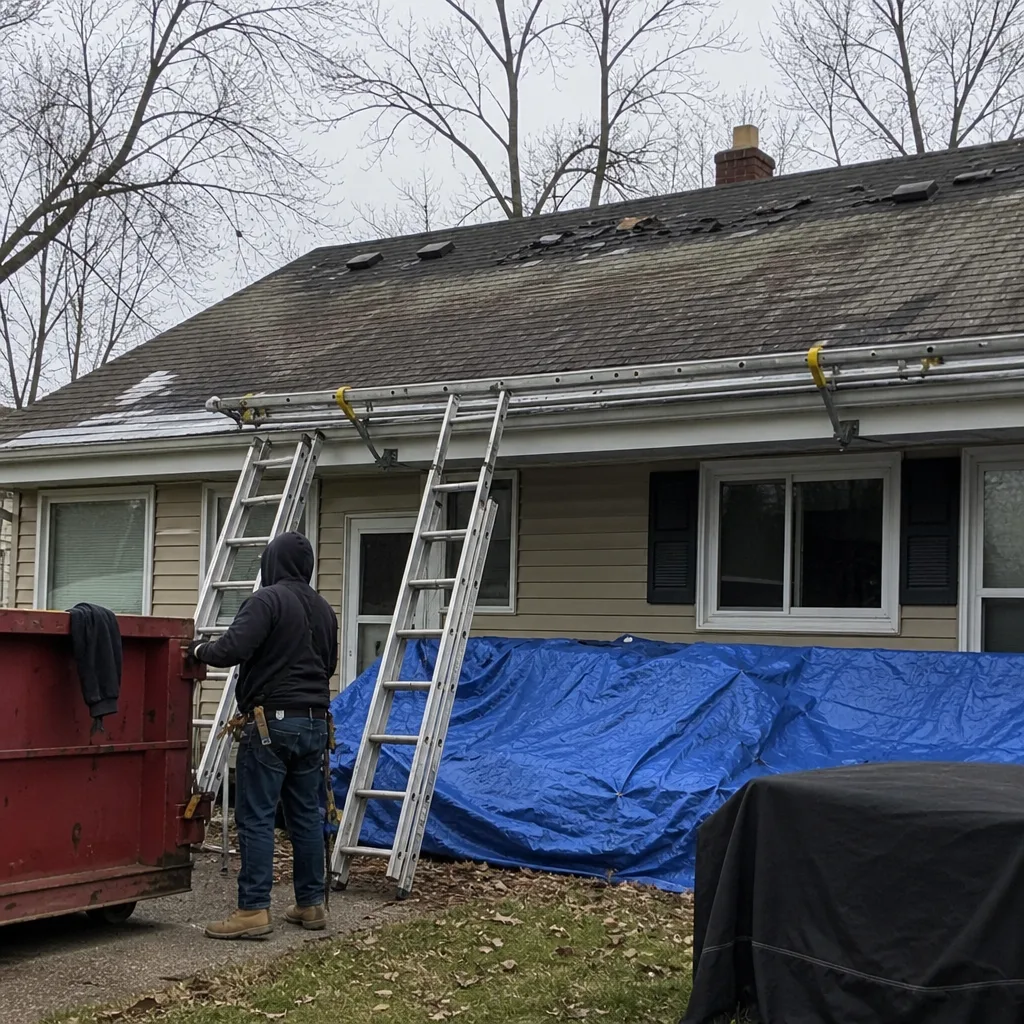 Before
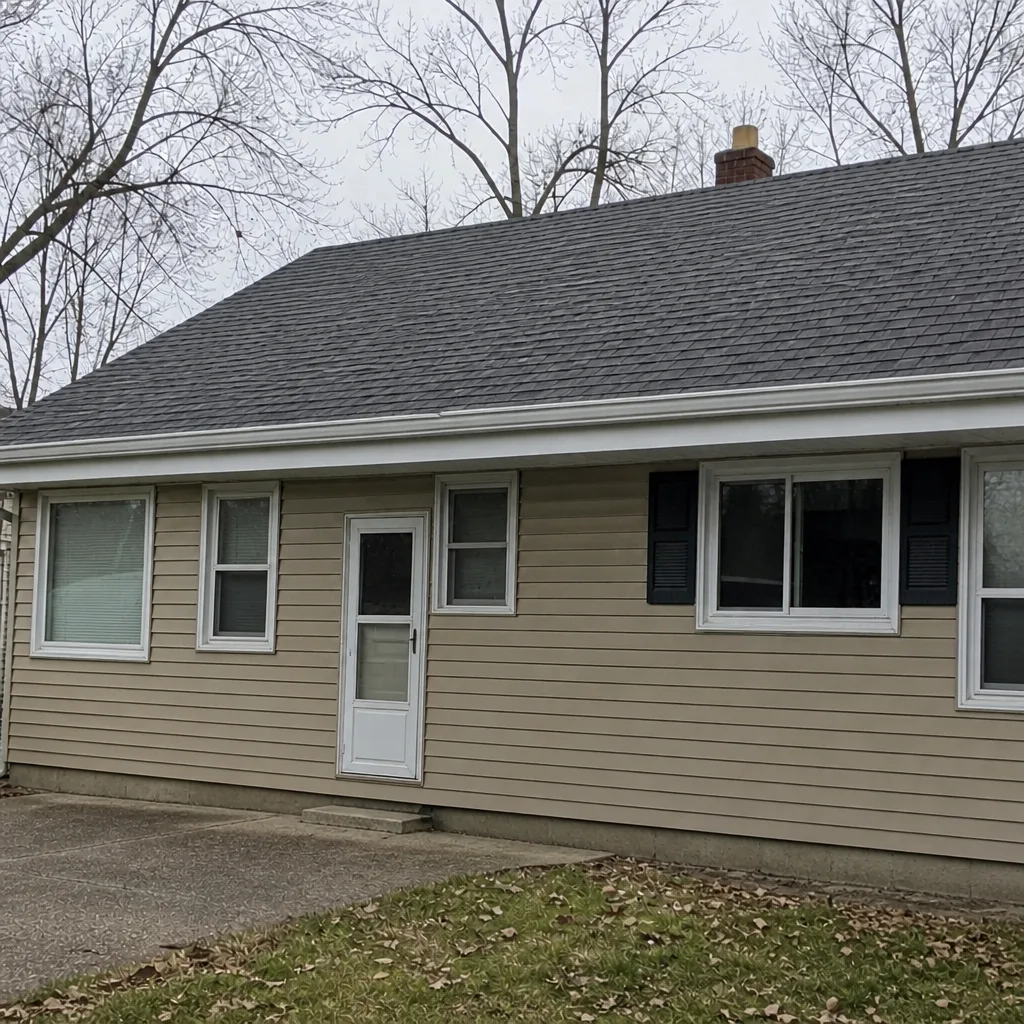 After
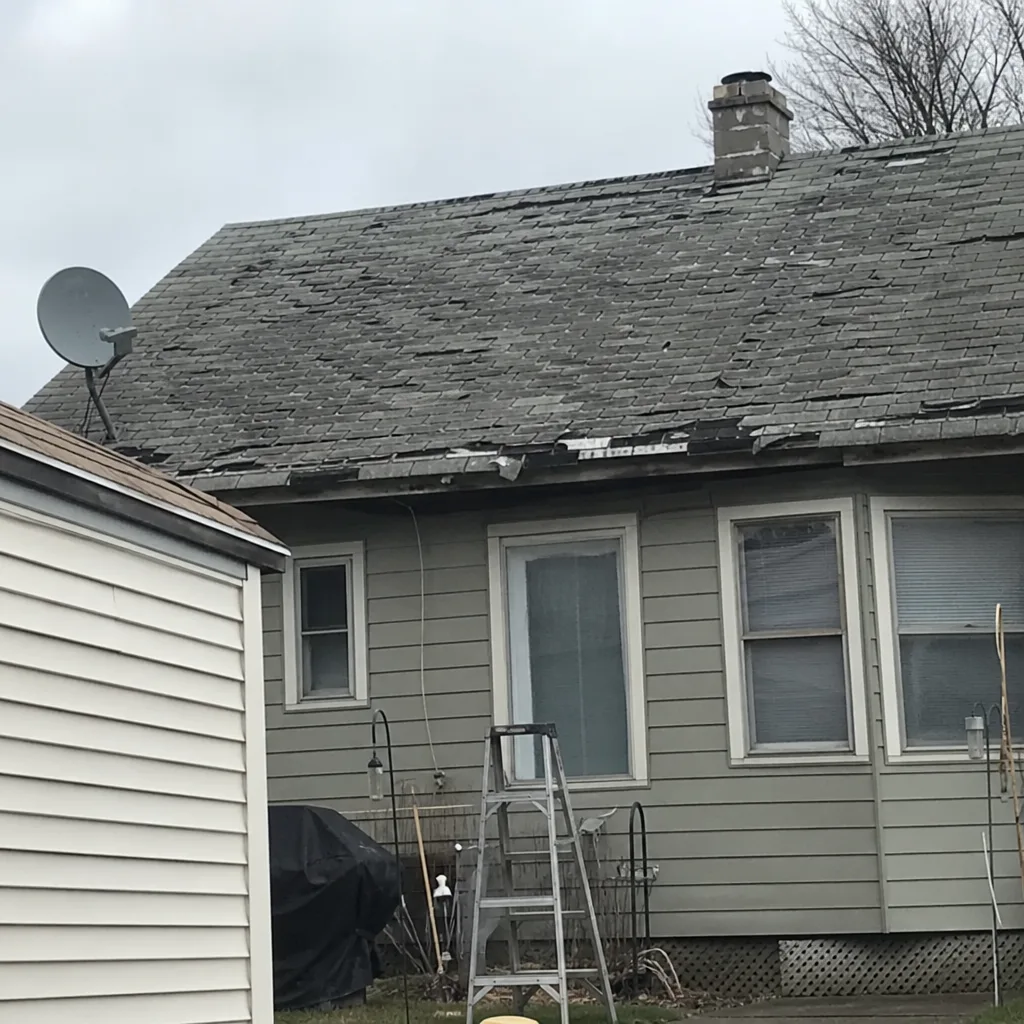 Before
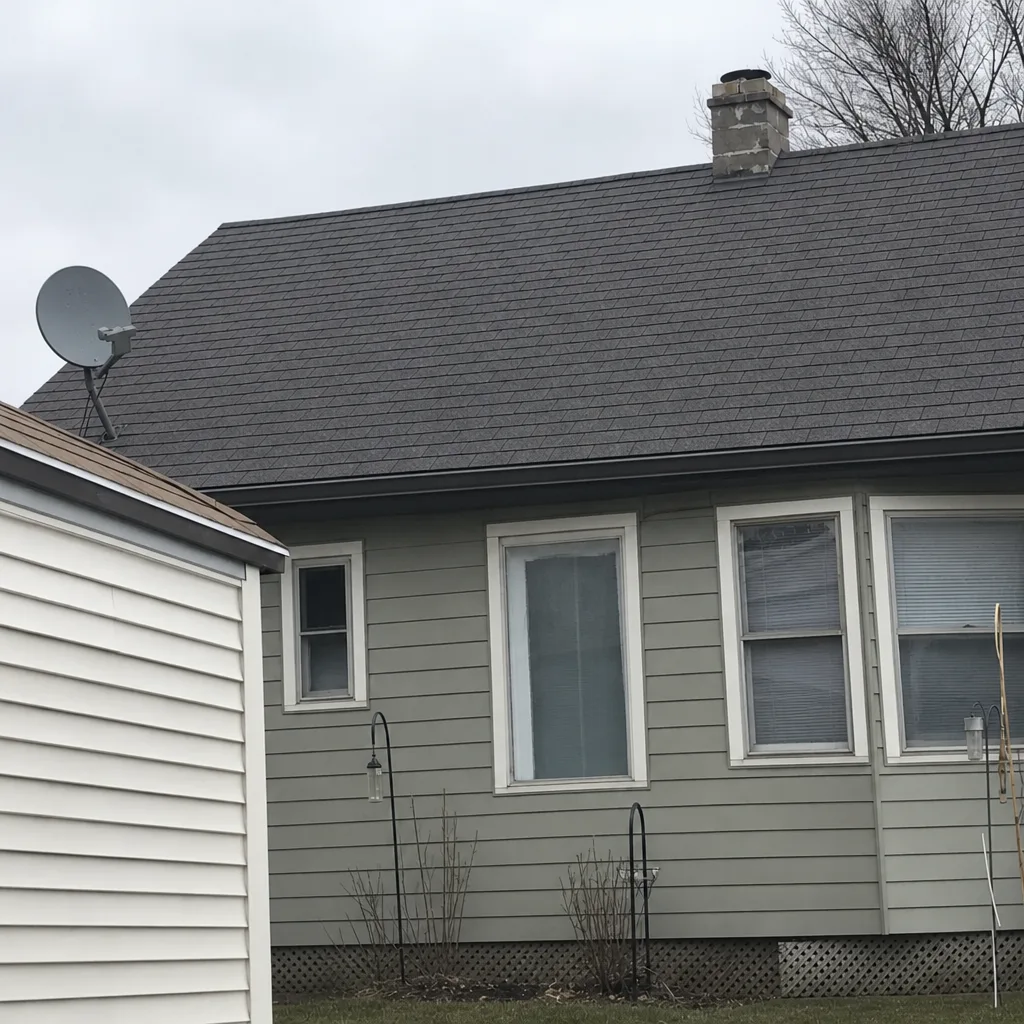 After
Frequently Asked Questions
Ice dam damage shows up as horizontal stains on interior ceilings near exterior walls, peeling paint at the wall-ceiling junction, or frost visible on the attic roof deck in January. Mark the stain and check after the next thaw – if it’s advancing, you have active water infiltration and should call for a roof inspection.
Granule loss means the shingle’s mineral armor is shedding, and the pattern tells you why. A light uniform dusting across a 15-plus-year-old roof is normal aging. A concentrated pile at one downspout, especially below a valley, points to accelerated wear on that roof plane and warrants a professional read.
Cupping and clawing are visible from the ground in good light, particularly when the sun hits the roof at a low angle. Thermal cracks appear as dark vertical lines. But the cause of these failures – ventilation shortfalls, attic heat loss, deck movement – is usually visible only from inside the attic, which is why a full inspection includes the underside of the deck.
Any ceiling stain that appears after a storm and grows or dampens with subsequent weather is active and urgent. Water is moving through the assembly, and every storm adds more. Call for a roof inspection before the next event, not after.
If the leak is at the flashing, yes – a proper flashing repair resolves the leak path at that location. The key is that the repair must address the full water entry point, not just the visible gap. Flashing failure caught early is often a modest repair; caught late, it can mean wall cavity and deck damage.
Not necessarily. Cupping points to moisture trapped in the shingle mat, usually from attic ventilation that isn’t moving enough air. If the deck is sound and the cupping is isolated, the fix may be ventilation work plus targeted shingle repair. If the deck is wet or the cupping is widespread, replacement becomes the more honest scope.
The Bottom Line
Roof warning signs are not isolated symptoms – they’re a sequence, and the sequence reads differently depending on what your Buffalo roof has been through. Granule loss tells you about age and wear concentration. Cupping, clawing, and thermal cracking point to three separate failure modes. Ice dam stains separate into historical and active, and the difference sets your urgency. Flashing fails before shingles do, and the interior of the attic often knows more than the curb view. A homeowner who reads these signals correctly knows when to wait, when to repair, and when to plan replacement – and knows that the smartest call is a diagnostic inspection before the next storm, not a rushed decision after one.
Written by the team at Tidewater Roof Repair, serving Buffalo since 2011.