
Last updated November 14, 2026
 Architectural shingles
 Metal roofing
 Tile roofing
 GAF
 Owens Corning
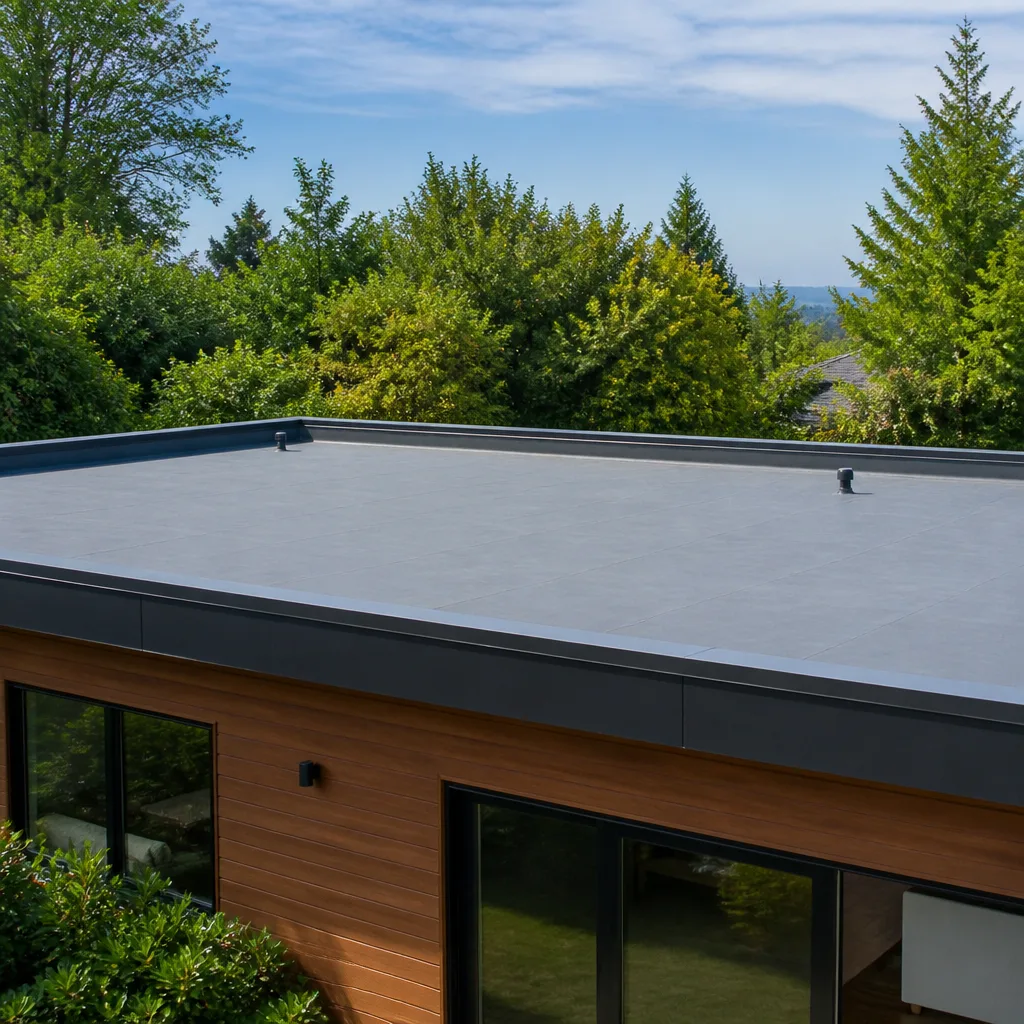 Flat & low-slope
Free roof inspection with deck photos before we talk money - GAF and Owens Corning certified installation
Roof Repair Maintenance Checklist for Buffalo Homeowners
The most expensive roof repair call in Buffalo comes in March, and it rarely starts with a dramatic failure. It starts in November, when a homeowner skips a walk around the roofline. Snow loads settle into valleys, ice works its way under flashing, and by the time the thaw hits, what could have been a $400 repair has become a structural problem. This guide is built around Buffalo’s actual failure sequence: the lake-effect freeze cycle, the January interior warning signs, and the February-to-March thaw that exposes everything the winter stressed. You’ll learn what to check before first freeze, what to watch for during the deep cold, and how to document your roof so repair conversations are based on evidence instead of guesswork.
Styles & brands we work with
- Architectural shingles
- Metal roofing
- Tile roofing
- GAF
- Owens Corning
- Flat & low-slope
Quick Answer
A Buffalo roof maintenance checklist works best when organized around seasonal transitions, not generic monthly tasks. Walk your roofline and clear soffit vents before the first hard freeze in November, check attic ceilings and rafter lines for moisture staining during January’s deep cold, and do a post-thaw inspection in late February through March to identify ice dam scarring and granule loss. Document what you find with dated photos, and call a roofing professional for anything involving flashing integrity, valley snow-load stress, or interior moisture that predicts exterior failure.
Table of Contents
- Pre-Winter Inspection: What to Check Before First Freeze
- January Interior Checks: Reading Ceilings and Rafters Before Spring
- Post-Thaw Sequence: February and March Roof Assessment
- Five Components Buffalo Homeowners Skip That Fail Most in Lake-Effect Climates
- Year-Over-Year Documentation: Building a Roof Condition Record
- Material Choices for Buffalo Roofs: Matching Product to Exposure
- Repair or Replace: How to Know What Your Roof Actually Needs
- Common Mistakes to Avoid
- When to Call a Professional
- Frequently Asked Questions
- The Bottom Line
Pre-Winter Inspection: What to Check Before First Freeze
The single most important maintenance window in Buffalo is the four to six weeks before the first hard freeze, typically mid-October through late November. This is when small problems become locked-in failures. Water that gets into a crack before freeze expands when temperatures drop, widening that crack through repeated freeze-thaw cycles all winter. A roof inspection in this window catches what summer heat and fall rain have stressed, before ice turns it into something worse.
Three items matter more than anything else on a Buffalo pre-winter walk:
- Soffit venting clearance. Buffalo’s lake-effect snow can drift against eaves and block airflow into the attic. When soffit vents are obstructed by insulation, debris, or ice, attic temperatures rise, snow melts unevenly on the roof deck, and ice dams form at the eaves. Clear every vent you can reach from a ladder, and check that insulation in the attic hasn’t been pushed over the soffit openings. Blocked soffit vents are one of the most common contributors to Buffalo ice damming.
- Flashing integrity before first freeze. Flashing is the metal or membrane material at roof transitions: chimneys, vent pipes, valleys, and where roof lines meet walls. It’s the most failure-prone part of any roof, and it fails faster when caulk or sealant around it hardens and cracks in cold weather. Look for lifted edges, visible gaps, cracked sealant, and rust on exposed metal. If you can see daylight under flashing or feel it flex when you press it, water is already working in. This is not a caulk-and-go fix; it’s a repair that needs proper replacement.
- Valley snow-load paths. Valleys are where two roof planes meet, and in Buffalo they carry the heaviest snow concentrations. Ice and snow slide down the roof surface and accumulate in these channels all winter. Before freeze, clear valleys of leaf debris, pine needles, and any roofing granules that have gathered. Debris in valleys slows water flow and gives ice a surface to bond to. Walk the valley lines visually from the ground or a ladder, and note any visible wear or exposed underlayment at the valley edges.
We look before we quote. That sequence matters on a Buffalo roof: an inspection tells you whether you need a repair, a replacement, or just another year of maintenance. Tidewater Roof Repair offers roof repair and roof replacement, but we start every job with a diagnosis. Many roofs that look ready for replacement in October are actually repairable, and the only way to know is to get on the roof and check what the season has actually done to it.
Pre-winter checks should also include a look at any rubber boots around vent pipes, which degrade in UV exposure and crack in cold, and a scan of the roof surface for shingles that have already lost adhesion. Lifted shingle corners in November become full-length tears by February. If you see any, they’re simple to fix now and far more involved to fix after ice has worked its way under them.
We recommend Buffalo homeowners perform this pre-winter walk every year, even if the roof is relatively new. The freeze cycle doesn’t care how old your shingles are; it cares whether there’s an opening.
January Interior Checks: Reading Ceilings and Rafters Before Spring
By January, you can’t safely walk most Buffalo roofs. Ice and snow cover the surface, and a roof that was walkable in October is now a serious hazard. But you can read a roof from the inside, and January is the most diagnostic month of the year for interior inspection. The cold outside and the warmth inside create a pressure difference that pulls moisture toward any roof opening, making stains easier to spot now than in any other month.
Start with ceilings. In every room on the top floor, look at the ceiling around light fixtures, at the corners where walls meet ceiling, and anywhere there’s a seam. January stains are often faint: a pale yellow patch, a water ring around a fixture, or a ceiling that looks lightly tea-stained. These are not leaks from melting snow on the roof surface. They’re signs that attic moisture is condensing and finding a path down. A ceiling stain in January means the roof deck or attic ventilation has a problem that will likely show up as exterior damage by March.
Then check the attic, if you have access. Wear a headlamp, and look first at the underside of the roof decking. You’re looking for wet spots on the plywood or OSB, dark patches that feel damp or look stained, and frost on the underside of the deck in very cold weather. Frost on the deck means warm, moist air is rising into the attic and freezing against the cold roof, and that frost becomes ice dam water when it thaws. It’s a direct predictor of spring leaks.
Rafter lines matter too. Where rafters meet the deck, look for dark streaks or staining along the wood grain. This is where water runs when it gets past flashing, and it’s often noticeable in January before it’s visible anywhere else. Pay special attention to rafters near chimneys, vent pipes, and any place where the roof plane changes direction.
Check the insulation for wet spots or flat, compressed areas. Wet insulation loses its R-value and becomes a heat leak, which accelerates ice dam formation. If you find wet insulation in January, don’t wait to see what happens in spring. Call a roofing professional. An interior moisture sign in January is an exterior roof problem waiting to thaw.
Tidewater Roof Repair performs roof inspections as a standalone service, and January is one of the most informative times of year to have one done. We’ve inspected attics in Buffalo where the ceiling looked fine but the rafter staining told us exactly where the spring leak would appear. Reading those interior signs early is what lets us fix a problem before it becomes a replacement.
Post-Thaw Sequence: February and March Roof Assessment
The thaw in Buffalo starts unevenly. South-facing slopes melt first, then ridges, then valleys, and finally the north-facing eaves. This staggered melt is diagnostic if you know what to look for, because different roof components reveal their damage in a predictable order.
Follow this sequence from late February through March, when the worst of the snow has gone but before spring rains start:
- Start with the valleys. As valley snow melts, it exposes what the winter did to these concentrated load paths. Look for dark lines along valley centerlines, which indicate that water got under the shingle and left a mineral stain. Look for granules that have been scoured off the shingle surfaces, especially at the valley edges where running water is fastest. And check for lifted or torn shingles at the valley transitions. These are the highest-stress points on a Buffalo roof.
- Check eaves and gutters for ice dam scarring. Ice dams leave distinct evidence: granules and fine asphalt particles concentrated in gutter troughs below the dam line, shingle surfaces that look scoured or polished above the eave, and sometimes a dark band across the roof at the point where ice sat for weeks. This type of wear is different from normal aging. Ice dam scarring is usually localized, occurring in bands, while normal granule loss is more uniform across the roof. If you see banding, your attic ventilation or insulation needs attention, not just your roof surface.
- Walk the flashing points. After thaw, dried salt, mineral staining, and lifted flashing edges are all visible. Chimney flashing and pipe collars show damage first, because the metal expands and contracts at a different rate than the shingles around it. Check for gaps where sealant has pulled away, and for any flashing that has lifted enough to allow a piece of paper underneath.
- Look for shingle buckling or lifting across the main roof field. Freeze-thaw cycles can push shingles up if moisture got under them in the fall. A shingle that looks raised or curled in March was probably already compromised by November, but the winter made it worse. These are typically repairable if found early, and they become roof replacement territory if they’re widespread.
The post-thaw inspection is also the right time to clean out gutters and downspouts, because everything the winter pushed off the roof is now sitting in them. Clogged gutters in spring mean overflow water against the fascia, and that drives rot and flashing failure through the summer. It’s a direct continuity of winter damage if left unaddressed.
Buffalo homeowners who do this March walk consistently tell us the same thing: the roof looks worse in March than it did in October, even when nothing failed. That’s not paranoia. Lake-effect moisture, repeated freeze-thaw cycles, and ice damming genuinely age a roof over one winter. The question is whether what you’re seeing is repairable or structural, and that’s where a professional inspection makes sense.
Five Components Buffalo Homeowners Skip That Fail Most in Lake-Effect Climates
Every maintenance checklist covers shingles and gutters. The roofs we see fail early in Buffalo are almost never failing because of the shingles themselves. They’re failing at the components homeowners don’t check, and lake-effect weather accelerates each one. Here are the five most-skipped components on Buffalo roofs, and why each one matters more here than in most of the country.
- Soffit vents and intake airflow. Lake-effect snow drifts higher and sits longer against Buffalo eaves than in most climates. Soffit vent obstruction is the single biggest contributor to ice dams and uneven attic temperatures on roofs we inspect. If your attic is warm enough to melt snow on the roof deck while the eaves stay frozen, that’s a ventilation failure, not a shingle failure. Check soffit vents from outside with a ladder and from inside in the attic, and make sure insulation isn’t blocking them.
- Flashing sealant and fasteners. The metal itself rarely fails first. What fails is the sealant around it, which hardens and cracks in repeated freeze-thaw cycles, and the fasteners holding it down, which back out as the metal expands and contracts. Buffalo’s temperature swings make this a bigger factor than in more temperate climates. Check for cracked sealant beads, loose flashing, and missing fasteners at every transition point twice a year: once before freeze and once after thaw.
- Valley underlayment and wear strips. Valleys are the highest-water-flow areas of any roof, and in lake-effect zones they carry water for weeks at a time as snow melts and refreezes. Homeowners look at the valley shingles but skip checking whether the underlayment below is still intact. Exposed underlayment at valley edges, missing wear strips, or shingles that have shifted in the valley all mean water is getting under the roof covering. These failures are quiet until they’re not.
- Attic vapor barrier and moisture control. Most Buffalo attic moisture problems are not roof leaks. They’re warm, moist air from the living space rising into a cold attic and condensing. If your attic lacks a proper vapor barrier or has gaps around ceiling penetrations like light fixtures and bathroom fans, the attic is filling with moisture every day, and that moisture freezes on the roof deck. The vapor barrier is a roof component in the broadest sense, and it’s the most invisible one to check.
- Gutter fastening and slope. Buffalo gutters carry more than rain; they carry ice sheets, snow melt, and whatever the lake-effect cycle pushes off the roof. If gutter hangers are loose or a gutter has lost its slope, water backs up, freezes, and pushes the gutter further. You’ll hear ice cracking in a gutter long before you see the fascia rot it’s causing. Check gutter slope with a level each spring, and replace any hangers that have pulled out of the fascia.
The pattern across all five is the same: none are shingles. Buffalo roofs fail at their transitions, their airflow paths, and their drainage systems. A checklist that only counts missing shingles misses the components actually driving failure. We look at all five on every inspection because we know from the roofs we see which parts fail first in this climate.
Year-Over-Year Documentation: Building a Roof Condition Record
The most useful maintenance habit a Buffalo homeowner can develop is not a repair skill. It’s building a year-over-year record of what the roof looks like, so when something changes, the change is visible. Most roof repair conversations are based on memory and guesswork. A homeowner remembers the roof looked fine, a contractor sees current damage, and neither has a baseline to compare against. Documentation solves that.
Here’s a simple, consistent system:
- Take photos on the same two dates every year. Pick one date in late October or early November, before first freeze, and one in late March, after thaw. Take photos from the same spots each time. The street view for overall roof condition, the ladder view at the eaves for flashing, and the ground view up each valley line. Consistency matters more than photo quality.
- Store them in a dedicated folder with the date in the filename. Don’t mix them with general house photos. Create a folder called “Roof Condition” and put every dated set in it. This is the record that matters when you call a contractor.
- Note the weather conditions. Write down what the winter was like: heavy lake-effect snow, severe ice damming, a January thaw. Roof wear is tied to weather events, not just calendar time. A roof after a brutal ice-dam winter is not the same as a roof after a mild one, even if they’re the same age.
- Mark any changes you see. When you compare this year’s photos to last year’s, circle what’s different. A new granule-loss patch, a shifted valley shingle, a dark stain that wasn’t there before. This is the evidence that drives a repair decision.
- Bring the record to repair conversations. When you call a contractor for a roof repair estimate, show them the sequence. A contractor who sees two years of documented change can make a much more accurate diagnosis than one who’s looking at a single current photo. It also protects you from being oversold: the evidence shows what’s actually changing, not just what one person’s opinion says.
This documentation habit is especially important in Buffalo because lake-effect weathering is incremental. One winter’s granule loss is nothing. Three winters of consistent granule loss in the same area is a pattern. The only way to see that pattern is to have the photos from each year. If you haven’t started yet, start this fall. Take your first set, and in March you’ll have your first comparison.
Material Choices for Buffalo Roofs: Matching Product to Exposure
Not every shingle performs the same in a Buffalo winter, and not every manufacturer makes a product suited to lake-effect conditions. This is where having multi-brand access makes a real difference. Contractors who carry a single product line are locked into recommending that product, whether it suits your roof’s exposure or not.
Tidewater Roof Repair works with seven major roofing manufacturers, including IKO, Atlas, Tamko, and Boral. That matters for two reasons. First, different products have different performance characteristics in cold climates. Some shingles have better granule adhesion, some have stronger nail strips that hold better in high wind, and some perform better under repeated freeze-thaw stress. Second, different products fit different budgets, and a homeowner shouldn’t have to compromise on performance because the contractor only carries one option.
For Buffalo roofs specifically, here’s what we look for when matching material to roof:
- Granule adhesion under ice. Ice dams and repeated snow melt scour granules off shingle surfaces. Some products hold granules better in these conditions than others. When we’re working with a roof that has significant valley load or ice dam history, we steer toward products with stronger granule bonding.
- Nail strip and wind performance. Lake-effect storms bring heavy wet snow and sometimes high winds off the lake. A shingle that’s properly rated for Buffalo’s wind zone is essential. Different manufacturers produce different wind-rated products, and multi-brand access means we can specify what the roof actually needs.
- Cold-weather install performance. Some materials become brittle in cold weather and require special handling during installation. If you’re having work done in late fall or early spring, the product choice matters. We know which materials install cleaner in cold conditions and which ones need a different approach.
- Color and heat retention. Lighter colors reflect more heat, which can slightly reduce attic temperature and ice dam tendency. Darker colors absorb heat and can help snow melt faster, which some homeowners prefer but which can contribute to uneven melt patterns. The right choice depends on your attic ventilation and your specific exposure.
You’re not limited to what one brand makes. That’s the core advantage of the seven-brand approach. When we inspect a Buffalo roof and see specific exposure conditions, we can recommend the specific product that matches those conditions and the homeowner’s budget. We’re not locked into one material line, so the recommendation is driven by the roof’s needs.
Repair or Replace: How to Know What Your Roof Actually Needs
Every homeowner facing a roof problem asks the same question: can this be repaired, or does it need replacement? The honest answer is that it depends on the pattern of damage, not the severity of any single issue. A single rotted valley can be repaired. Widespread granule loss across an entire roof field cannot. The distinction matters because the cost difference is significant.
Here’s the framework we use when evaluating a Buffalo roof:
Repair is usually right when:
- Damage is localized to one or two areas: a valley, a flashing point, a small section of shingles.
- The roof structure underneath is sound, with no widespread deck rot or rafter damage.
- The roof has years of expected life remaining on the majority of its surface.
- The problems are component failures, not system-wide aging.
Replacement is usually necessary when:
- Granule loss is widespread and uniform across multiple slopes.
- Shingles are curling, cupping, or cracking across most of the roof field.
- Interior moisture damage is appearing in multiple rooms from multiple roof points.
- The roof deck has widespread rot or structural issues from long-term water exposure.
- The roof is at or past its expected service life for its material type.
This is exactly why we perform inspections before we quote anything. We look before we quote. A contractor who jumps straight to a replacement recommendation without inspecting the roof may be seeing dollar signs, not damage. A contractor who says every problem is repairable may be avoiding the bigger job. The right answer is the one that matches the actual scope of what the roof needs.
Tidewater Roof Repair handles inspection, repair, and replacement under one name. That matters because the team that inspects your roof is the same team that repairs or replaces it. There’s no handoff, no miscommunication between assessment and execution, and no incentive to recommend a scope we don’t think the roof actually needs. Repair when repair is right, replace only when it’s necessary.
Common Mistakes to Avoid
- Waiting until spring to look at the roof. By March, water that got in during February has already done its damage. The pre-winter window in November is when inexpensive repairs prevent expensive spring failures. Buffalo’s freeze cycle doesn’t wait.
- Clearing snow from the roof with a metal shovel or ice pick. This can tear shingles, crack flashing, and create the very problems you’re trying to prevent. If snow removal is necessary, use a roof rake from the ground with a roller or guard, and leave a thin layer of snow. Better yet, address the ventilation and insulation issues that are causing the ice dams in the first place.
- Caulking over failed flashing instead of replacing it. Caulk is a temporary seal at best. In Buffalo’s temperature swings, caulk hardens, cracks, and fails within a season or two. Flashing that has lifted or separated needs proper replacement, not a bead of sealant over the gap.
- Ignoring a single ceiling stain because it’s small. A January ceiling stain is an early warning sign, not an isolated blemish. Small interior moisture marks typically indicate larger problems in the attic or roof deck that will only grow. Document it, check the attic above it, and call a professional.
- Assuming a new roof means no maintenance. Even a high-quality new roof has flashing, valleys, vents, and gutters that need seasonal checks. A new roof that goes unmaintained in a lake-effect climate will develop problems years before its rated life expectancy.
- Replacing a roof based on visible shingle wear alone. Shingle granule loss can be cosmetic or structural depending on where it is and what’s causing it. Replacing an entire roof because of localized shingle wear often means spending significantly more than the roof actually required.
- Skipping the yearly photo record. Without baseline photos, you can’t accurately assess whether the roof is changing over time. Memory is not a reliable maintenance tool, especially after a winter like Buffalo delivers.
When to Call a Professional
Some roof checks are safe to do from the ground or a ladder, but others require professional access, and a few require immediate attention. Call a roofer if you see any interior water staining that you cannot confidently trace and fix, any daylight visible through the roof deck in the attic, widespread granule loss across multiple slopes, or flashing that has lifted enough to allow water underneath. Also call if you’ve had an ice dam winter and see the characteristic banding or granule accumulation in gutters that indicates ice dam wear. Walking a roof with snow or ice on it is genuinely dangerous, and even dry winter roofs demand proper safety equipment and training. The steep, snow-covered, ice-ringed roof is not the place to learn what’s wrong with it. Tidewater Roof Repair offers free estimates in Buffalo – call (866) 389-4577 to schedule an inspection, and we’ll do the roof work while you stay safely on the ground.
Frequently Asked Questions
Buffalo roofs benefit from twice-yearly inspections: once in late October or early November before first freeze, and once in late February or March after thaw. The freeze-thaw cycle and lake-effect snow put unusual stress on Buffalo roofs, and seasonal inspections catch the stress points before they become failures. If your roof is older than 15 years, we recommend having a professional inspection at least once a year in addition to your own seasonal walks. Call (866) 389-4577 to schedule a roof inspection.
Ice dams form when the attic is warm enough to melt snow on the upper roof, but the eaves are cold enough to refreeze that meltwater as ice. Repeated cycles build up an ice ridge at the eave, and water backs up behind it, working under shingles and into the roof deck. The root cause is almost always insufficient attic insulation or blocked soffit vents, not the shingles themselves. Fixing the ventilation and insulation is the only permanent solution; removing ice after it forms is just damage control.
Roof repair costs in Buffalo vary widely depending on the component and the extent of the damage. Minor repairs like replacing individual shingles or resealing a pipe collar are typically in the low hundreds, while flashing replacement, valley repair, or multiple-area repairs run higher. The only way to get an accurate number is to have the roof inspected and receive a written, line-item estimate. Call (866) 389-4577 for a free estimate, and we’ll tell you exactly what the roof needs and what it will cost.
Walking on a roof is riskier than most homeowners realize, and in Buffalo it’s especially dangerous from late fall through early spring. Wet shingles, snow, ice, and the steep pitches common on Buffalo homes create serious fall hazards. We recommend doing visual checks from the ground and a ladder, and leaving anything that requires walking the roof surface to professionals with proper safety equipment and training. A fall from even a single-story roof can cause life-changing injuries.
The answer comes down to the pattern of damage. Localized problems like damaged flashing, worn valleys, or a small section of failed shingles are usually repairable. Widespread granule loss, curling or cupping shingles across most of the roof, or interior moisture damage in multiple rooms usually means replacement is the right call. The only reliable way to know is a professional inspection that looks at both the roof surface and the structure underneath. We perform inspections before we quote anything, so you get a diagnosis before a dollar figure.
Check the attic directly above the stain first, looking for wet insulation, rafter staining, or frost on the roof deck. Document what you see with photos, and call a roofing professional even if the stain is small. January moisture is an early warning sign that the roof deck or ventilation has a problem that will likely show up as exterior damage by spring. The sooner it’s diagnosed, the more likely it is to be a repair rather than a replacement. Call (866) 389-4577 for a free estimate.
The Bottom Line
Buffalo roofs don’t fail randomly. They fail in a predictable sequence tied to the lake-effect freeze cycle, and a maintenance checklist that ignores that sequence misses the point. Check soffit venting, flashing, and valleys before first freeze. Read ceilings and rafters in January. Do a methodical post-thaw assessment that distinguishes ice dam scarring from normal granule loss. Document everything with dated photos so repair decisions are based on evidence, not estimates. And when the evidence points to a problem, get a professional inspection before you get a price. A roof that’s maintained seasonally rarely surprises anyone. The roofs that fail in March are the ones that were never walked in November.
Written by the team at Tidewater Roof Repair, serving Buffalo since 2011.
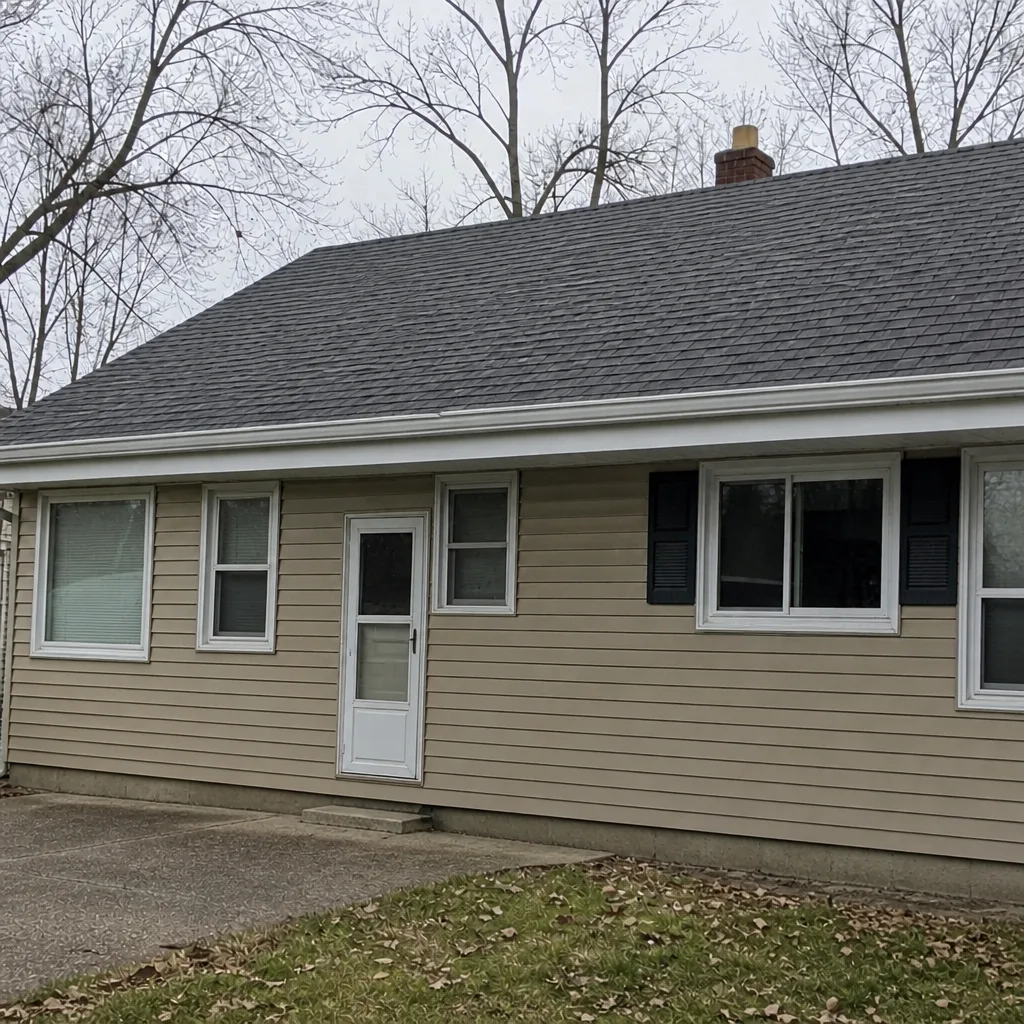
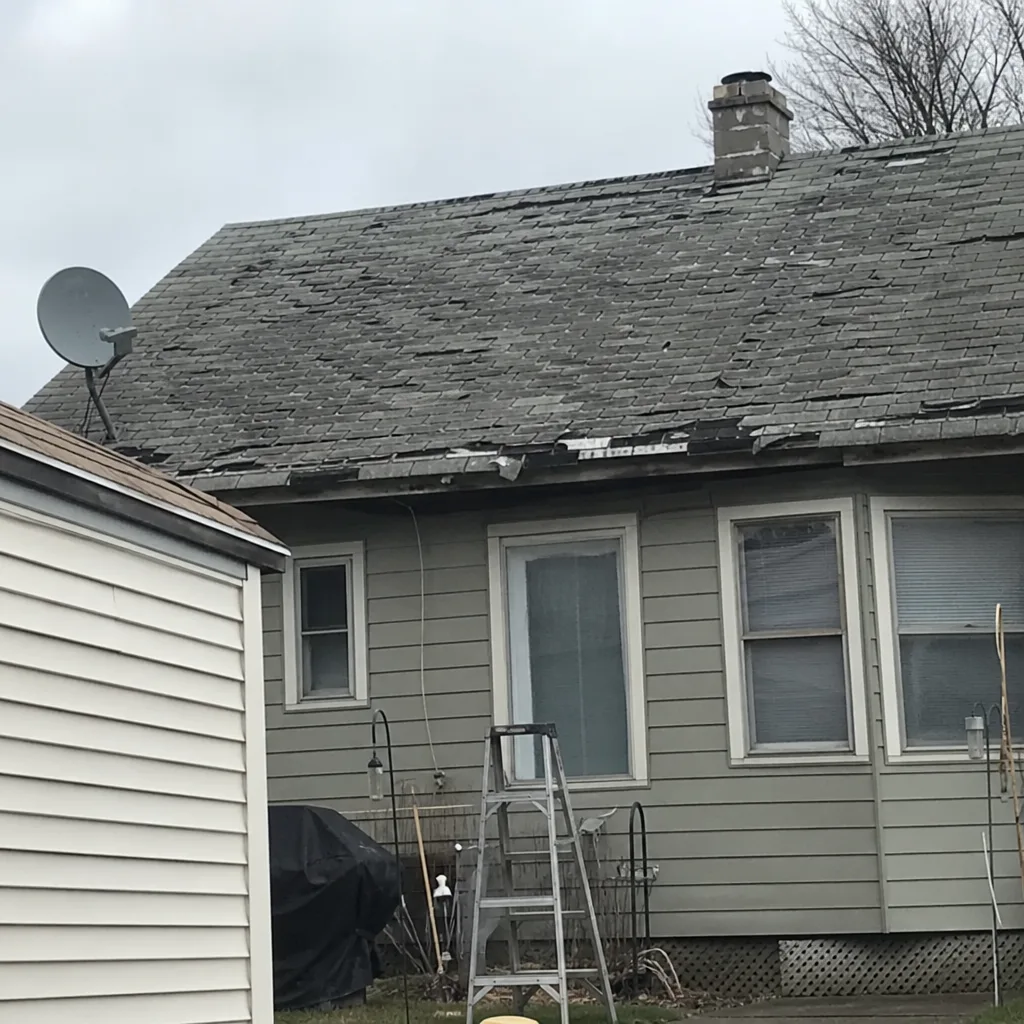
See the difference
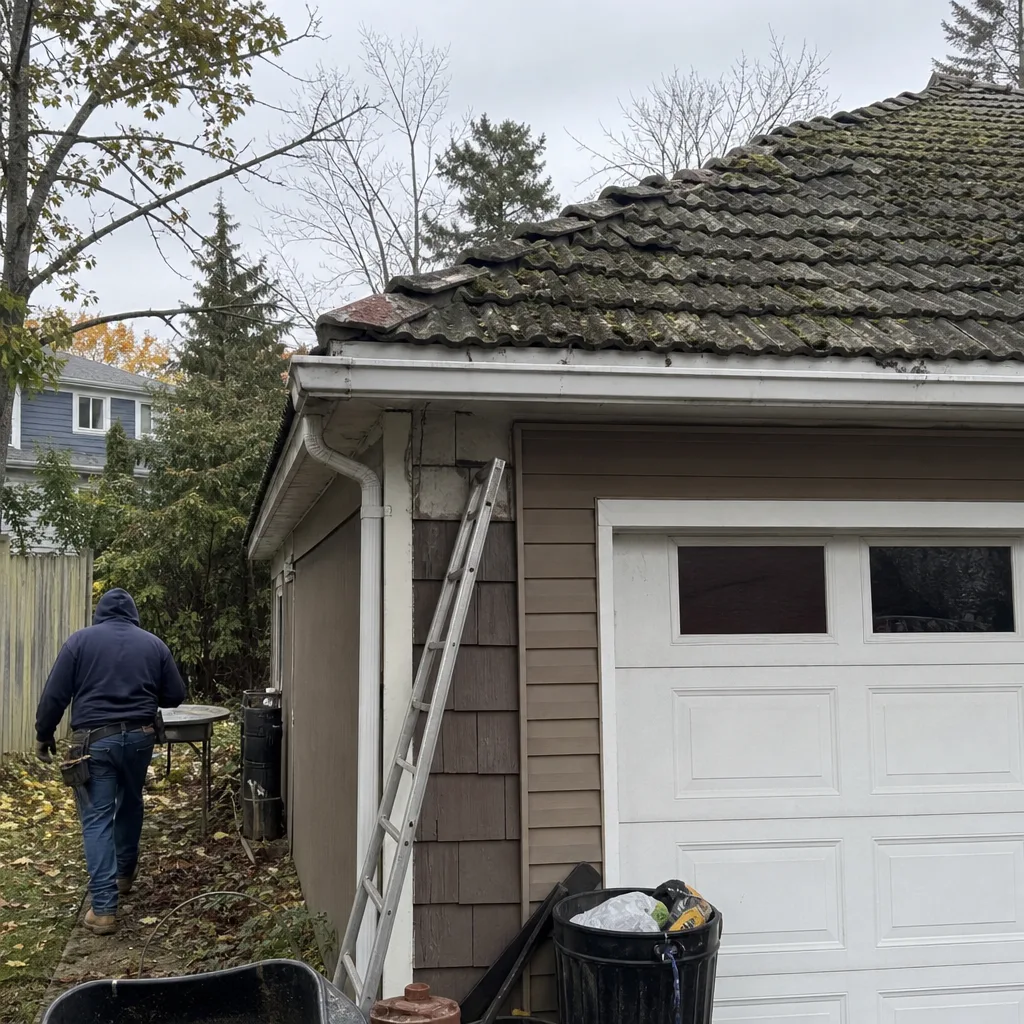 Before
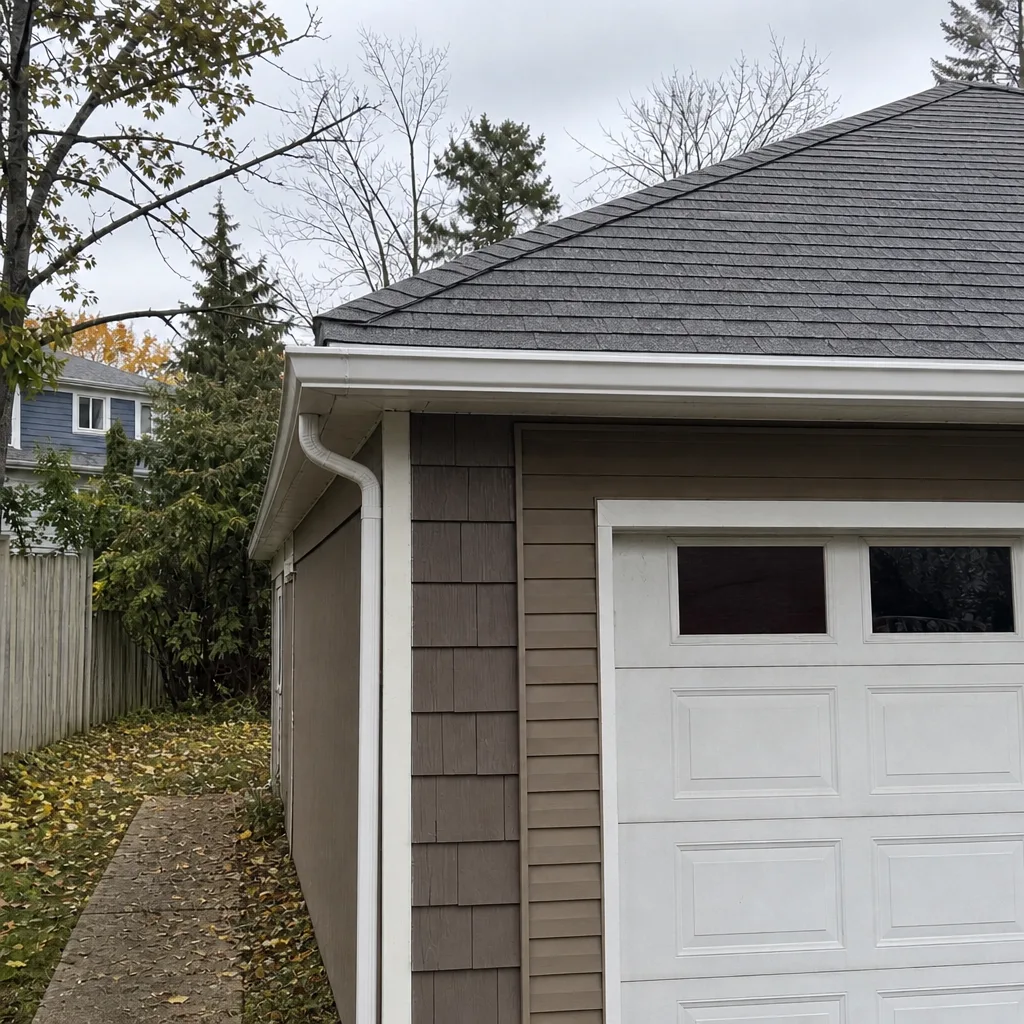 After
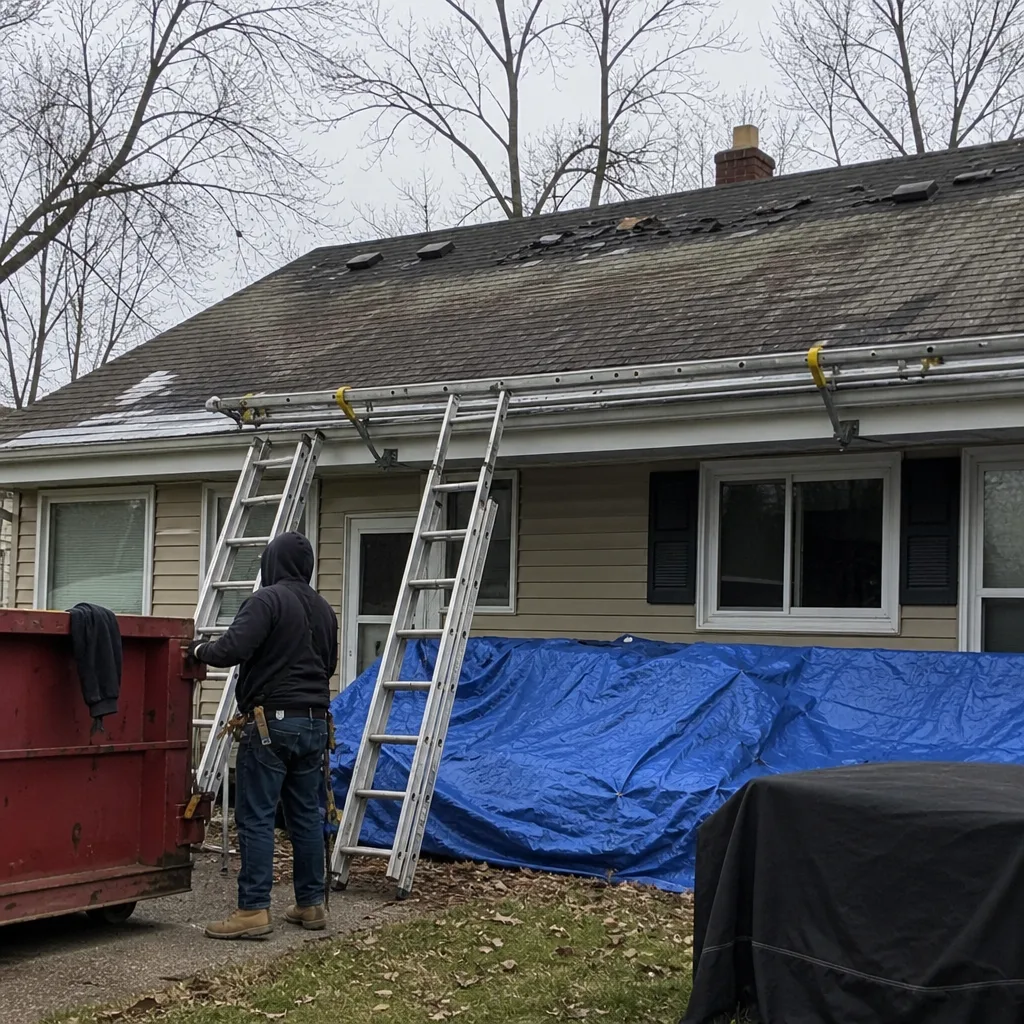 Before
 After
 Before
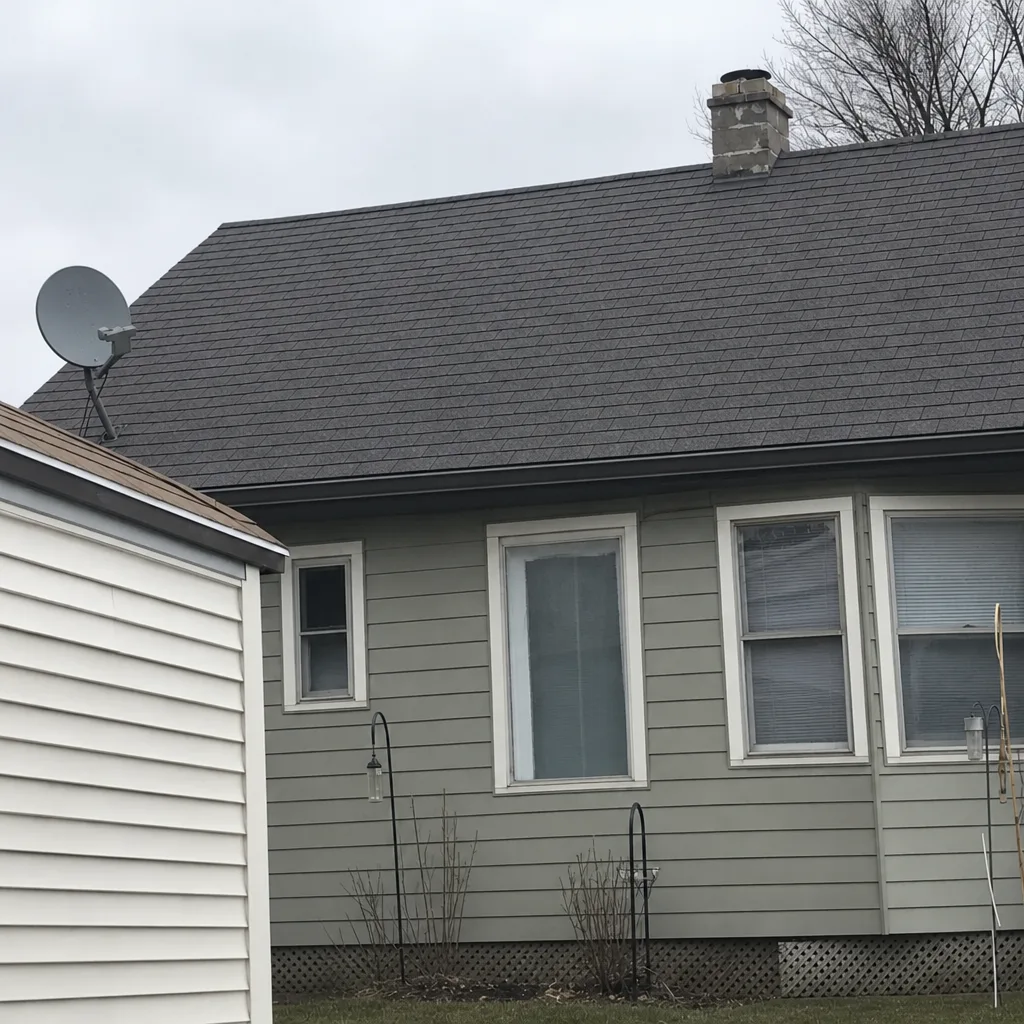 After