
How to Choose the Right Roofing Company in Buffalo
The most dangerous roofing contractor isn’t the one with the bad reviews. It’s the one with good reviews for speed and price who quietly installs the wrong product for your roof’s pitch, your region, and the ventilation system already sitting in your attic. Buffalo roofs live through freeze-thaw cycles, lake-effect snow loads, and summer heat that works shingles from both directions, and the wrong material choice can look fine on day one and fail years early.
Choosing a roofing company in Buffalo comes down to four things worth more than any star rating: whether they inspect before they quote, whether they can offer real material options, whether their licensing and insurance actually check out, and whether their warranty is a document or a promise. Get those right and the price conversation sorts itself out. If you’d rather have a trained eye look at it than climb up yourself, call (866) 389-4577 – estimates are free.
Why the Consultation Tells You More Than Any Credential
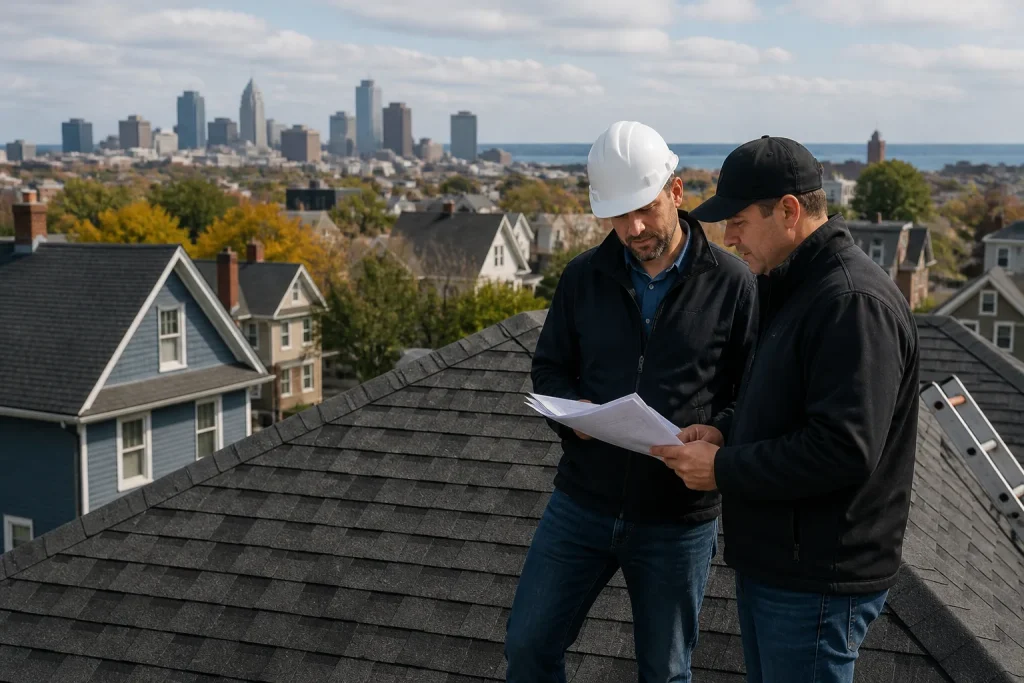
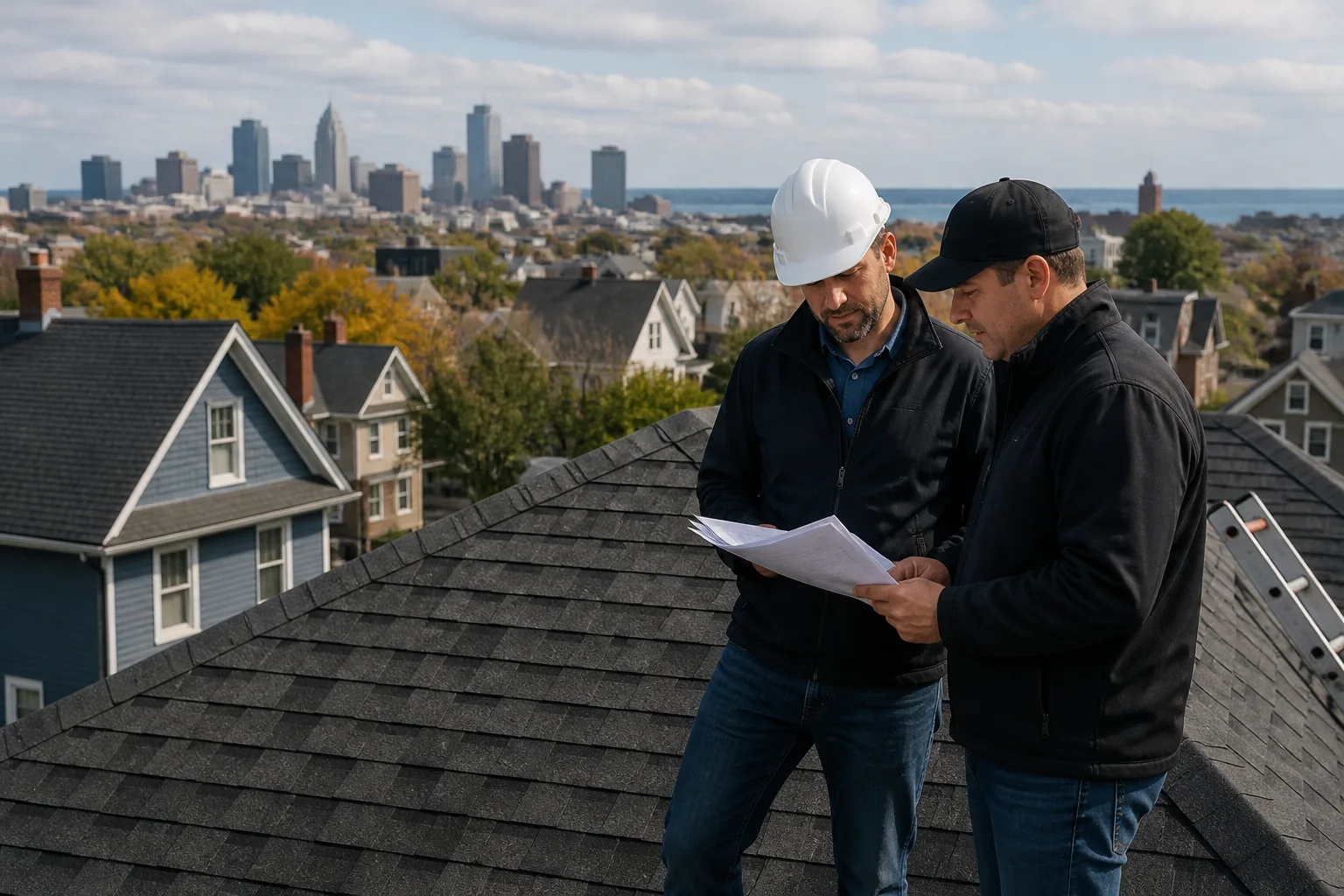
A good roofing consultation in Buffalo starts in the attic and ends with a written scope, not the other way around. Before any contractor quotes a number, they should be up on the roof measuring pitch, checking flashing and penetrations, and down in the attic looking at insulation depth, ventilation intake and exhaust, and any staining on the deck. A roofer who skips the attic is quoting a surface, not a system.
Here’s what to watch during the walkthrough:
- Do they measure the pitch? Steep-slope roofs shed snow differently than low-slope ones, and the shingle or membrane that suits one can be wrong for the other.
- Do they check ventilation? A roof that can’t breathe traps moisture, and trapped moisture shortens the life of whatever you put on top of it, no matter the brand.
- Do they ask about your heating costs or attic conditions? That’s a systems-level question. It tells you they’re thinking about the whole assembly, not just the shingles.
- Do they put the findings in writing? A diagnosis on paper is one you can compare against another contractor’s. A verbal estimate is one you have to take on faith.
We look before we quote. That order matters in Buffalo, where a roof that’s “just old” sometimes needs ventilation work as much as it needs new shingles. The consultation is where you find out which.
The Material Access Question Most Homeowners Never Ask
Ask a roofing contractor which manufacturers they can install from. If the answer is one, you’re getting whatever that brand makes, whether or not it’s the right fit for your roof. Buffalo roofs vary a lot: a steep Victorian near Delaware Park and a low-slope addition out toward the suburbs don’t want the same product, and a contractor locked to a single supplier has to make one product line work for both.
Access to several manufacturers changes the recommendation. It means the product gets matched to your roof’s pitch, the existing ventilation, and your budget instead of being the only thing on the truck. When we quote roof replacement, we can weigh options across GAF, CertainTeed, Owens Corning, IKO, and others, and explain the real differences between them rather than steering you toward a single product line.
Two questions worth asking on this point:
- “What manufacturers can you source from, and why would you pick one over another for my roof?”
- “If a different product suited my pitch or budget better, could you install it?”
The answers tell you whether you’re getting an assessment or a sales pitch for whatever’s in stock.
What Licensing and Insurance Actually Cover in New York State
New York doesn’t issue a single statewide roofing license the way some states do, so “licensed” can mean different things depending on where in Erie County the work happens. Some municipalities require their own registration or permit for roofing work, and permit rules vary by jurisdiction. The honest answer is that you should ask your city or town building department what applies at your address rather than trust a contractor’s description of their own paperwork.
Insurance is the part you can and should verify directly. There are two coverages that matter:
- General liability covers damage to your home or property if something goes wrong on the job.
- Workers’ compensation covers the crew if someone gets hurt on your roof. Without it, an injury can come back to you as the homeowner.
Don’t take a contractor’s word for either. Ask for a certificate of insurance, then call the insurer listed on it and confirm the policy is active and the coverage amounts are what you were told. A contractor with nothing to hide will hand over the certificate without hesitation. In our experience, the ones who get cagey about it are telling you something.
How to Compare Roofing Quotes in Buffalo Without Getting Fooled
Comparing roof quotes by bottom-line number is how homeowners end up paying more later. One quote at a lower price often reflects less scope: fewer layers torn off, thinner underlayment, ventilation left as-is, or decking repairs excluded and billed later as a change order. To compare fairly, line up the quotes side by side against the same scope.
Use this checklist for each quote:
- Scope in writing: tear-off, decking replacement allowances, underlayment, flashing, ridge venting, and cleanup should each be itemized.
- Materials named: specific product and manufacturer, not “architectural shingles.”
- Permits: who pulls them, and whether the cost is included.
- Change-order terms: how unexpected decking damage gets priced and approved.
- Timeline and payment schedule: when money is due, and against what milestones.
If one quote is dramatically lower than the others, find out what’s missing before you celebrate. In Buffalo, the difference is usually ventilation, decking, or flashing work that got quietly left out.
The Warranty Stack: What You Need in Writing Before Work Starts
A roof comes with two separate warranties, and homeowners often confuse them. The manufacturer’s warranty covers the materials and usually the shingles themselves. The contractor’s workmanship warranty covers the installation: how the product was nailed, flashed, and sealed. A great material warranty means little if the workmanship that put it on your Buffalo roof wasn’t done right.
Ask for both in writing, and ask what voids them. Common voids include improper ventilation (another reason the attic inspection matters), installation by someone other than the warranting contractor, and certain alterations after the fact. Understand what transfers if you sell the house, too; a roof nearing the end of its life is a real point of negotiation in a Buffalo sale.
When it comes to repair versus replacement, ask what the roof actually needs. Repair when repair is right, replace only when it’s necessary. A contractor who can handle both scopes under one roof has no reason to push you toward the bigger job, and the roof repair work we do is handled by the same team that inspected the roof, so nothing gets lost in a handoff.
When to Call a Pro Instead of Waiting
Some roof problems are safe to watch. Others aren’t. Call a professional if you see water staining spreading on a ceiling after a storm, missing or visibly lifted shingles, granules collecting in gutters, daylight showing through roof boards in the attic, or ice dams forming repeatedly along the same edge each winter in Buffalo. Those are signs that point to a system problem, not surface wear.
Roof work means heights, and a fall is a serious injury. We don’t recommend climbing up to inspect or patch it yourself. Leave the ladder work and the diagnosis to trained technicians, and get an inspection first so you know the actual scope before any money changes hands.
Related services in Buffalo: if you’re comparing contractors, our Buffalo page covers how we work locally, and Tidewater Roof Repair is the place to start for a full inspection, repair, or replacement under one company.
The Bottom Line
Choosing a roofing company in Buffalo is less about finding the cheapest bid and more about finding a contractor who treats your roof as a system, has the material range to match the solution to your structure, and puts their findings in writing. Insist on an inspection before a quote, verify licensing and insurance yourself, compare quotes scope-for-scope, and get both the material and workmanship warranties in writing before anyone climbs up.
If you’re in Buffalo and want a straight assessment, we can help. Tidewater Roof Repair offers free estimates, and our seven-brand material roster means you’re not limited to what one manufacturer makes. Call (866) 389-4577 to schedule your free estimate.
Frequently Asked Questions
Start with how they inspect, not their price. Choose a contractor who inspects the attic and measures pitch before quoting, who can offer products from more than one manufacturer, whose insurance you can verify directly, and who puts the scope and both warranties in writing. Those four things separate a real assessment from a sales call.
New York doesn’t have a single statewide roofing license, and permit and registration rules vary by municipality, so check with your local building department about what applies at your address. What you can verify everywhere is insurance: ask for a certificate of general liability and workers’ compensation coverage and confirm it with the insurer before work starts.
A manufacturer warranty covers the materials, typically the shingles themselves. A workmanship warranty covers the installation: nailing, flashing, and sealing. They’re separate, and you want both in writing. Ask what voids each, since poor ventilation or work by another contractor can affect coverage.
It depends on the roof’s age, the extent of the damage, and what the attic inspection turns up. Localized problems like flashing or a small leak are often repair candidates, while widespread shingle failure plus ventilation problems can point toward replacement. Get an inspection that tells you which, in writing. Call (866) 389-4577 for a free estimate and an honest answer.
Written by the team at Tidewater Roof Repair, serving Buffalo since 2011.
Need Roofing Help?
Call Tidewater Roof Repair - licensed & insured, with free written estimates in Buffalo.
(866) 389-4577